
Wondering how much do divorces cost in Texas and what the final cost might be? They can range from as low as $300 for an uncontested case to over $20,000 for a contested one. Many factors affect these costs, such as legal fees and whether the divorce is amicable or contested. In this article, we'll break down the different costs and help you understand what to expect regarding how much do divorces cost in Texas. If you're dealing with the complexities of divorce proceedings or family law issues, reach out to a Houston divorce attorney at The Law Office of Jimoh PC by calling (713) 271-8484 or schedule an appointment here.
Introduction to Divorce Costs
The cost of a divorce in Texas can vary widely depending on several key factors, including the type of divorce, the level of conflict between spouses, and the complexity of the case. Understanding the different components of divorce costs can help individuals better prepare financially for the divorce process. In Texas, the average cost of a divorce can range from a few hundred dollars for an uncontested divorce to tens of thousands of dollars for a contested divorce involving significant assets. Knowing these potential expenses upfront can help you plan more effectively and avoid unexpected financial burdens.
Key Takeaways
-
The average cost of a divorce in Texas ranges from $15,600 for those without children to over $20,000 for contested cases, influenced by factors like county, marriage duration, and asset complexity.
-
Uncontested divorces are significantly less expensive, often costing between $300 to $5,000, especially when utilizing online services, while contested divorces involve higher attorney fees and additional legal expenses.
-
Mediation presents a cost-effective alternative to litigation, typically costing between $100 to $300 per hour, and can help reduce stress and accelerate dispute resolution compared to court proceedings.
Average Divorce Costs in Texas
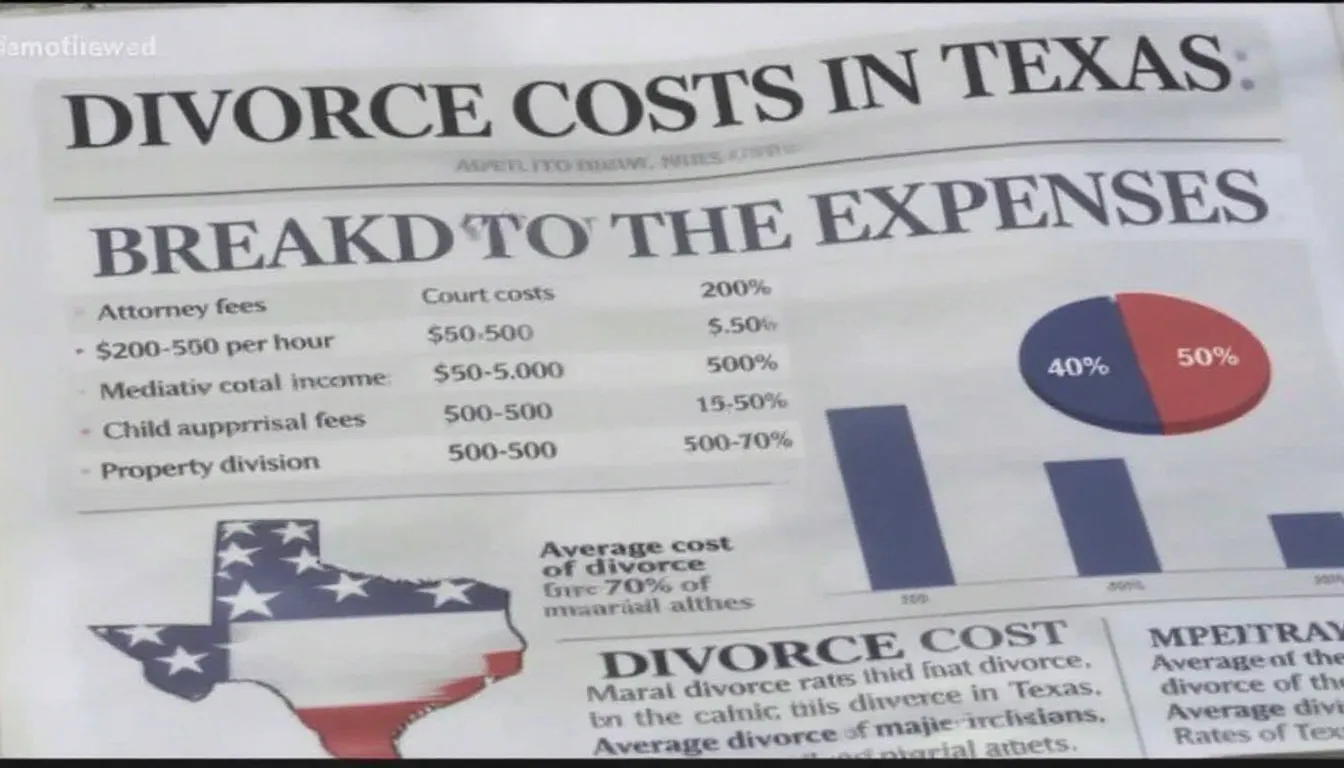
The average cost of a divorce in Texas can vary widely, ranging from a few hundred dollars to tens of thousands. On average, a divorce without children costs around $15,600. Uncontested divorces, where both parties agree on all issues, typically cost between $300 to $5,000, while contested divorces, involving disputes that require court intervention, can range from $5,000 to $20,000 or more.
The divorce decree, which is the final legal document issued by the court, can also impact the financial implications of the divorce, especially in cases where one spouse fails to respond to the divorce petition.
Factors such as the county of filing, duration of the marriage, complexity of asset division, and legal representation significantly influence the overall divorce costs. Choosing the right divorce process and maintaining amicable conduct during divorce proceedings can also impact expenses.
Uncontested Divorce Costs
Uncontested divorces in Texas are generally more affordable, as they eliminate the need for lengthy court proceedings. Filing fees for a divorce typically range between $100 and $400, depending on the county. Larger counties like Harris and Dallas may have higher fees compared to smaller counties. Attorney fees for uncontested divorces can often be arranged as a flat fee, making it easier to manage costs. In some cases, if the divorcing partners can agree on all issues, it may not even be necessary to hire a lawyer, further reducing expenses.
Online divorce services have become an increasingly popular option, providing a cost-effective alternative to traditional legal representation. These platforms can facilitate the entire divorce process for under $200, making them an attractive choice for those seeking to minimize costs. Couples choosing an uncontested divorce and using online services can greatly reduce their overall divorce costs.
Contested Divorce Costs
Contested divorces tend to incur much higher costs. This can make the process more financially burdensome. The average cost for a contested divorce in Texas ranges from $5,000 to $20,000 or more, depending on the complexity of the issues involved. In contested divorces, complexities such as custody disputes and asset division often necessitate additional legal representation, further increasing the overall costs. These costs can quickly escalate due to extensive negotiations, legal disputes, and the need for expert testimony, including texas divorce costs.
Experienced attorneys are essential in such cases, but an experienced attorney also contributes to higher legal fees.
Factors Influencing Divorce Costs
Several factors can influence the cost of a divorce in Texas, including attorney fees, court filing fees, and the complexity of the case. Uncontested divorces tend to be less expensive than contested divorces, as they typically require less legal representation and court involvement. The presence of child custody disputes, property division, and spousal support can also increase divorce costs. Additionally, the cost of hiring a divorce lawyer, court fees, and other legal expenses can add up quickly. It's essential to consider these factors when planning for divorce costs and to explore cost-effective options, such as mediation and online divorce services. By understanding these key factors, you can better manage your financial expectations and make informed decisions throughout the divorce process.
Attorney Fees: What to Expect
Attorney fees are among the largest expenses in a divorce. In Texas, these costs vary widely based on case complexity and attorney experience, typically ranging from $200 to $300 per hour. The median final bill for a consulting attorney is around $3,000, with the average divorce lawyer cost contributing significantly to these expenses.
Factors influencing these costs include contested issues and the level of court involvement required. Knowing these key factors and selecting the right legal representation is key to managing overall divorce costs.
Hourly Rates and Retainers
Divorce attorneys in Texas commonly charge by the hour, with average rates around $270 per hour. These rates can vary based on the attorney's experience, the complexity of the case, and the location of their practice.
Retainers, which are upfront payments to secure an attorney's services, are also a common practice. Understanding these rates and fitting them into your budget is vital for planning divorce expenses.
Impact of Case Complexity
The complexity of a divorce case can significantly impact the total costs. Complex divorce cases often result in higher attorney fees due to the intricacies and the need for more extensive legal work. For instance, disputes over child custody and support frequently lead to substantial increases in costs, as they often require legal representation and expert evaluations. These disputes can also involve additional costs such as hiring separate evaluators, contributing to rising legal expenses.
Ongoing costs may arise after the divorce, including potential modifications to custody or support arrangements that could entail additional legal fees. Increased legal fees may occur during ongoing child custody disputes and visitation due to the preparation and response time required by attorneys.
Thus, recognizing how case complexity affects legal fees is vital for effective financial planning.
Filing Fees and Court Costs
In Texas, the initial court filing fee for a divorce can vary based on the county, typically ranging from $100 to $400. Filing for divorce is a fundamental part of the divorce process and incurs divorce filing fees.
For individuals experiencing financial hardship, some counties in Texas offer fee waivers, allowing them to access the court system without incurring the financial burden of filing fees.
Beyond the initial filing, additional legal expenses may include costs for service of process, court reporters, court fees, and other related fees. Being aware of these costs in advance helps in effectively managing your divorce budget.
Initial Filing Fees
The typical range of court filing fees for divorces in Texas is between $250 and $350. Some counties, like Harris and Dallas, may have higher filing fees compared to smaller counties. These fees are an essential part of the initial divorce process and should be accounted for in your overall budget.
Additional Legal Expenses
Beyond the initial filing fees, there are additional legal expenses to consider. These can include fees for serving divorce papers, which can range from a few dollars to over $100 depending on the service method. Other costs may arise from hiring court reporters, generating legal documents, and obtaining certified copies of the final decree.
Valuing assets like real estate often requires professional real estate appraisers to determine fair market value, which can also add to the financial burden involving significant assets. These additional costs can quickly accumulate, so it's essential to be aware of significant assets when planning your divorce budget.
Mediation and Alternative Dispute Resolution
Mediation is a cost-effective alternative to traditional litigation, offering a way to resolve disputes without the high legal fees and emotional stress of court proceedings. Mediation allows couples to control the outcome of their divorce and potentially lower legal costs.
Mediation can expedite the resolution of disputes, saving time and money compared to traditional court proceedings.
Mediation Costs
In Texas, mediation fees generally range from $100 to $300 per hour. This amount can vary based on different factors. In an uncontested divorce, mediation costs are generally estimated within this range, making it an affordable alternative to litigation. Fees for private mediators can range from $200 to $500 per hour, while court-approved mediators typically charge between $100 and $300 hourly.
County-sponsored mediation programs might offer lower fees, ranging from $50 to $200 per session. These programs can provide a more affordable option for couples looking to resolve their disputes without incurring high mediator fees or legal fees.
Benefits of Mediation
Mediation can minimize emotional stress and offer a cost-effective alternative to traditional divorce litigation. Mediation can facilitate quicker resolutions than court proceedings, saving time and money.
Overall, mediation offers significant benefits by reducing conflicts, providing emotional relief, and saving on legal costs.
Child Custody and Support: Financial Implications

Child custody and spousal support obligations can significantly impact the total expenses incurred during a divorce. These long-term financial commitments often require professional evaluations, which can raise divorce costs.
In addition to child support, spousal maintenance can also significantly impact the financial obligations during and after the divorce process.
Recognizing the financial implications of custody arrangements and support obligations is vital for effective divorce planning.
Custody Evaluations
Custody evaluations in Texas typically range in cost from $1,000 to $2,500 when conducted by county services. Private custody evaluators may charge as much as $15,000 for their evaluations. These evaluations may incur additional costs for each involved party, starting at $2,000, with extra charges for interviews and court appearances.
These costs can significantly increase overall high costs and divorce cost, along with associated costs and divorce expenses.
Child Support Calculations
In Texas, child support calculations are generally based on the non-custodial parent's income, following a percentage guideline. Payments are calculated as a percentage of the paying parent's net monthly income, starting at 20% for one child. The guidelines take into account the number of children and the parent's net resources, subject to a capped income threshold.
The maximum amount of child support can reach $3,680 per month for families with five or more children.
Property Division & Asset Division
In Texas, property acquired during marriage is considered community property and is subject to division in a divorce. The division of marital assets, including real estate, retirement accounts, and other property, can be a complex and costly process. Couples can save money by agreeing on property division and asset division, rather than leaving it to the court to decide. It's also important to consider the tax implications of property division and to seek the advice of an experienced divorce attorney to ensure a fair and equitable division of assets. Properly valuing marital assets and understanding what is considered community property can help you navigate this challenging aspect of the divorce process more effectively.
Property Division & Asset Division
Property division and asset distribution can be one of the most complex and costly aspects of a Texas divorce. In Texas, marital property includes everything acquired during the marriage, regardless of whose name is on the title. Expenses such as appraisal fees, expert witness fees, and costs related to document preparation can significantly add to the financial burden of a divorce.
Reaching a settlement agreement on property division can simplify the process and potentially eliminate the need for extensive legal assistance, thereby reducing overall costs.
Recognizing the difference between community and separate property is vital for effective asset division.
Community vs. Separate Property
In Texas, property acquired during marriage is typically classified as community property, while property owned before marriage or acquired by gift or inheritance is considered community property separate property. The distinction between community and separate property can significantly impact the division of assets during a divorce.
Separate property is not subject to division, while community property is divided equitably between the spouses.
Valuation of Assets
Valuing marital assets is a crucial step in the divorce process, as it directly impacts financial settlements. Real estate appraisals typically cost between $300 and $500, depending on the property's location and complexity. Assessing retirement accounts involves determining their present value, which may incur fees ranging from $200 to $2,000, depending on account types and complexities.
Business valuations are another significant expense, especially for divorces involving substantial assets. These valuations can cost anywhere from $5,000 to $50,000 based on the size and nature of the business. Proper valuation ensures a fair division of assets, but it also adds to the overall divorce costs.
Additional Costs and Hidden Expenses
Beyond the obvious costs, divorces can bring unexpected expenses. In Texas, child support typically continues until a child turns 18 or graduates high school, whichever occurs later, affecting long-term financial planning. Consulting with experienced family law attorneys can help avoid costly mistakes that may lead to higher legal fees and complications in the divorce process. Custodial parents using comprehensive child support services incur a $35 annual fee if they collect at least $550 in support, alongside a possible $3 monthly processing fee.
Additionally, unforeseen expenses like attorney fees for serving divorce papers can accumulate quickly, with costs ranging from a few dollars to over $100, depending on the service method.
Tax Implications
Tax implications are another important factor to consider in a divorce. Receiving alimony may result in taxable income for the recipient, while the payer can potentially deduct alimony payments on their taxes. Divorce settlements may have tax consequences, such as shared responsibility for prior tax liabilities and implications of filing status during the year of divorce.
Being informed about tax implications is vital for effective financial planning during and after a divorce.
Post-Divorce Expenses
Post-divorce expenses can also burden your finances long after the divorce is finalized. Costs for health insurance premiums may persist, particularly if one spouse was previously covered under the other's policy.
These ongoing potential expenses should be considered when planning a post-divorce budget to avoid financial hardship.
Planning for Divorce Costs
To manage divorce costs effectively, it's crucial to plan ahead and consider all potential expenses. This includes court filing fees, attorney fees, and other legal costs, as well as the potential costs of mediation, arbitration, or other alternative dispute resolution methods. Couples can save money by agreeing on key issues, such as child custody and property division, and by using online divorce services or mediation to resolve disputes. It's also essential to gather all necessary financial records and documents, including tax returns, bank statements, and property deeds, to ensure a smooth and efficient divorce process. By understanding the factors that influence divorce costs and planning ahead, individuals can minimize their financial burden and achieve a cost-effective divorce process.
Cost-Saving Tips for Divorces in Texas

There are several strategies to help reduce divorce costs. Peaceful interactions can lower expenses by preventing prolonged litigation. Being transparent with financial disclosures helps avoid disputes that could lead to higher legal costs.
Open communication with your attorney and organized interactions can help manage costs by reducing billable hours. Opting for attorneys with flat-fee billing offers clear budgeting and helps control divorce expenses.
DIY Divorce
A DIY divorce can be a practical option for those looking to save money, especially if both spouses agree on most issues. This approach saves money by eliminating attorney fees, significantly reducing overall costs and providing a cost effective divorce process.
However, understanding the legal complexities and assessing your comfort with handling legal procedures is essential before opting for a DIY divorce.
Online Divorce Services
Online divorce services offer a cost-effective way to manage the divorce process. These platforms often provide affordable packages for preparing divorce documents and streamlining the filing process. They are designed to simplify the divorce process for individuals looking for affordable solutions, making them an attractive option for many.
Short-Term Legal Help
Using limited-scope legal services can significantly reduce divorce costs. This approach allows individuals to handle their divorce paperwork without hiring a divorce lawyer for full representation, saving on legal fees.
Online divorce services and DIY options can further simplify the filing process and help manage costs effectively.
Contact Our Houston Divorce Law Firm Today
If you're navigating child support issues or any family law concerns, reach out to a Houston family law attorney at The Law Office of Jimoh PC by calling (713) 271-8484 or schedule a time here.
Our dedicated team of family law attorneys is committed to providing professional and compassionate assistance in your child support cases. We are well-versed in the complexities of Texas child support laws and offer personalized guidance to ensure a smoother process. From calculating child support to managing custody arrangements, our attorneys are prepared to assist with all aspects of family law. Don't hesitate to book your free initial consultation today.
Summary
Navigating the financial landscape of a divorce in Texas can be daunting, but understanding the various costs involved can help you plan more effectively. From filing fees and attorney costs to mediation and post-divorce expenses, each factor plays a crucial role in the overall financial impact. By exploring cost-saving strategies like DIY divorces, online services, and limited-scope legal help, you can manage your divorce expenses more efficiently. Remember, the goal is to emerge from the divorce process financially stable and ready to move forward with your life.
Frequently Asked Questions
What is the average cost of a divorce in Texas without children?
The average cost of a divorce in Texas without children is approximately $15,600. Being aware of these costs can help you prepare financially for this significant life change.
How much does an uncontested divorce cost in Texas?
An uncontested divorce in Texas generally costs between $300 and $5,000. The final amount may vary based on specific circumstances and legal fees involved.
What are the typical hourly rates for divorce attorneys in Texas?
The typical hourly rate for divorce attorneys in Texas is approximately $270. This rate can vary based on factors such as the attorney's experience and the complexity of the case.
How are child support payments calculated in Texas?
Child support payments in Texas are calculated based on a percentage of the paying parent's net monthly income, beginning at 20% for one child. This ensures that financial responsibilities are fairly distributed according to the parent's ability to pay.
What are the benefits of using mediation in a divorce?
Mediation offers quicker resolutions, reduces legal costs, and minimizes emotional stress, making it a cost-effective alternative to traditional litigation in divorce proceedings.
Comments
There are no comments for this post. Be the first and Add your Comment below.
Leave a Comment